Reformer Pilates for Back Pain: What the Evidence Says
Contents
Back pain is one of the most common health complaints in the UK. According to the NHS, more than 80% of people will experience lower back pain at some point in their lives, and an estimated 10 million adults in the UK live with it on an ongoing basis. It's the leading cause of disability in the country, responsible for around 31 million lost working days every year.
If you're one of those people, you've probably tried a few things. Rest. Pain relief. Possibly physiotherapy. Maybe you've been told to "keep moving" without being given much guidance on what moving actually means for your specific situation.
Reformer Pilates is increasingly the answer that patients, physiotherapists and exercise specialists reach for - and the evidence behind it is growing. This post explains why, drawing on what the research shows and what FLOW's own physiotherapist instructors see in the studio week after week.
Why Back Pain Is So Common - and So Persistent
Most back pain starts as a relatively simple problem: muscles and structures around the spine that aren't strong enough to support the demands placed on them. Sedentary jobs, long hours at a desk, too little movement, poor posture over time - these gradually weaken the deep muscles that hold the spine stable, and the result is pain.
The frustrating thing about back pain is that it tends to come back. You rest, it settles, you get on with life, and then something - a slightly awkward movement, a long drive, a week of not exercising - brings it back. This cycle is so common that the NHS specifically recommends staying active as the primary management strategy for most lower back pain, rather than rest.
The problem is that not all exercise is equal when it comes to the back. High-impact activities can aggravate pain. Heavy lifting without good form makes things worse. Even some gym exercises target the superficial muscles while leaving the deep stabilisers (the muscles closest to the spine that actually provide support) largely untrained.
This is precisely where reformer Pilates comes in.
What the Research Shows
The evidence base for Pilates in the treatment of back pain has grown considerably in recent years, and the findings are consistent.
A 2024 systematic review and meta-analysis published in Disability and Rehabilitation found Pilates exercise to be effective for reducing low back pain, with meaningful improvements in both pain levels and associated disability. A 2025 randomised controlled trial specifically examining reformer Pilates in chronic musculoskeletal pain found significant improvements in pain, sleep quality, fatigue and pain-related beliefs in participants following a structured reformer programme. Multiple studies comparing Pilates to standard home exercise programmes have found Pilates to produce superior outcomes for subacute and chronic back pain.
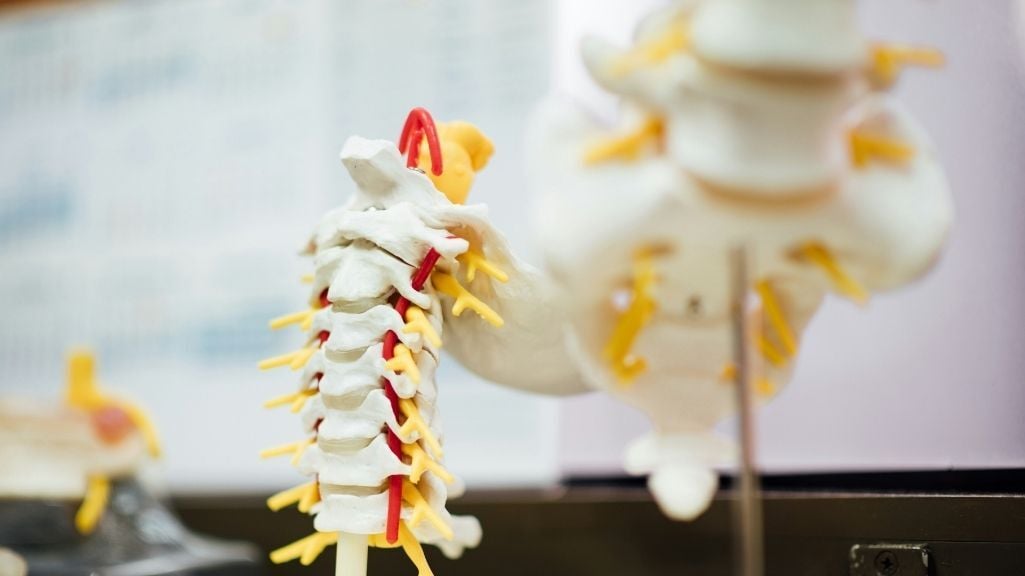
Importantly, the research also suggests that Pilates works through a specific mechanism: strengthening the deep core muscles that directly support the spine. These include the transverse abdominis (the deepest abdominal layer), the multifidus (the muscles running along either side of the spine), and the muscles of the pelvic floor. These are not muscles that most conventional gym programmes train effectively - but they are precisely the muscles the reformer is designed to engage.
A systematic review examining Pilates and core muscle activation in chronic lower back pain, published in Healthcare journal, concluded that Pilates produces measurable improvements in the activation of the deep stabilising muscles associated with spinal support - providing a physiological explanation for why patients consistently report reduced pain and better function.
Why the Reformer Is Particularly Well-Suited to Back Pain
Mat Pilates has benefits, but for people with back pain, the reformer offers something mat work alone can't provide: variable support and resistance that can be dialled to exactly where you are.
Laura, one of FLOW's physiotherapist instructors, explains the difference:
"The reformer gives us tools that simply aren't available on a mat. We can support the spine in a way that allows someone with pain to start moving well again without fear or discomfort. And then, as strength builds, we can progressively challenge those same muscles. The same exercise becomes harder as the person becomes more capable. That kind of precision is genuinely difficult to achieve any other way."
Specifically, the reformer helps with back pain in several key ways:
It allows movement without loading the spine. Many exercises on the reformer are performed lying down, which removes the compressive force of gravity on the spine. This means someone in acute discomfort can begin strengthening their core and improving mobility without the pain that standing or mat-based exercise might provoke.
The springs provide assistance before resistance. For someone whose muscles around the spine are weak or in spasm, the reformer's springs can initially assist movement - guiding the body through a range of motion it might not yet manage on its own. As strength improves, the same springs provide resistance, making the exercise progressively more demanding without any change in the exercise itself.
It teaches the body to move correctly. A significant driver of recurring back pain is faulty movement patterns - the body compensating around pain, reinforcing asymmetries and muscle imbalances that increase the load on the spine over time. The reformer's structure provides continuous feedback about alignment, helping the body relearn how to move in ways that protect rather than aggravate the back.
It decompresses the spine. Several reformer exercises involve lengthening and traction movements that gently open up the spaces between vertebrae. People with disc-related back pain, in particular, often report significant relief from these movements.
Becca, FLOW's head instructor and a qualified physiotherapist with a Masters degree, works with many clients who come to the studio specifically because of back pain:
"A lot of the people I see have been managing back pain for years. They've often tried various things and not found anything that consistently helps. What I find with the reformer is that it gives people confidence back in their bodies and they realise quite quickly that movement isn't the enemy, it's part of the solution. The support the machine provides makes that psychological shift possible, alongside the physical one."
What Types of Back Pain Can Reformer Pilates Help With?
Reformer Pilates is not a cure for all back conditions, and if you're dealing with a serious spinal problem it's always important to consult a medical professional before starting any new exercise programme. That said, the research and clinical experience supports its use across a broad range of common back presentations:
Non-specific lower back pain: the most common category, where no specific structural cause is identified. This responds particularly well to reformer Pilates because the core strengthening directly addresses the underlying weakness that sustains the pain.
Disc-related pain: including bulging or herniated discs. Reformer Pilates is often used in physiotherapy settings for disc conditions because it can strengthen the surrounding musculature without the loading and compression that aggravate disc symptoms.
Postural back pain: pain arising from sustained poor posture, common in desk workers and those who sit for long periods. The alignment work and postural awareness built through reformer Pilates is particularly effective here.
Chronic back pain: pain that has persisted for three months or more. The 2025 research specifically examining chronic musculoskeletal pain and reformer Pilates showed meaningful, sustained improvements in this group.
Post-injury rehabilitation: reformer Pilates is widely used by physiotherapists as a bridge between acute treatment and return to full activity, because it allows controlled progressive loading within a safe, supported environment.
Laura adds an important caveat from a clinical perspective:
"Reformer Pilates is genuinely effective for most common forms of back pain, but it works best when the instructor knows what they're working with. At FLOW, we always encourage members to tell us about any back issues before class which means we can ensure the right modifications are in place from the beginning, and make sure every movement is actually helping rather than inadvertently making things harder."
What to Expect If You Come to FLOW with Back Pain
One of the most common concerns we hear from people with back pain is: "I'm not sure if I'll be able to do it." The answer, in almost all cases, is yes, with the right modifications in place.
FLOW's small class sizes are not just a comfort consideration - they're a clinical one. With a maximum of eight reformers in Bottesford, and slightly more in Bingham and Grantham, instructors can genuinely observe each person throughout the session, provide individual adjustments, and check that form and spring settings are appropriate.
If you're coming to FLOW with a back condition, here's what we'd recommend:
Mention it when you book. You can note any back issues via email at hello@flowreformerstudio.co.uk before your first class, or let your instructor know when you arrive. The more they know, the more precisely they can support you.
Start with a beginner or mixed-ability class. These sessions are specifically designed to build foundations - the controlled, precise movements that form the basis of safe reformer practice for anyone with back pain.
Expect to be surprised by how much you can do. The support the reformer provides often means that people who assumed they'd be restricted discover they're able to work through a much fuller range of movement than they expected - comfortably.
Be consistent. The research is clear that the benefits of Pilates for back pain accumulate over time. Most people notice meaningful improvement within four to six weeks of attending regularly. Two sessions per week tends to produce better results than one, but one is very much worth doing.
When to Check With Your GP First
Reformer Pilates is safe for the vast majority of people with common back pain. However, you should speak to your GP before starting if:
- You have been diagnosed with a serious spinal condition such as spinal stenosis, spondylolisthesis, or vertebral fractures
- You have back pain accompanied by numbness, tingling or weakness in the legs
- You have back pain following a recent fall or injury
- Your back pain is accompanied by unexplained weight loss, fever, or other systemic symptoms
- You are in acute, severe pain
In these situations, your GP or physiotherapist may still recommend reformer Pilates but it's important that it's introduced at the right stage and with the right guidance.
A Note on Qualification
Not all Pilates studios are equal, and this matters most when it comes to back pain. Instructors vary significantly in their training, their understanding of anatomy, and their ability to make appropriate modifications for people with pain.
At FLOW, the instructor team includes two qualified physiotherapists - Laura (BSc Physiotherapy) and Becca (Masters in Physiotherapy, BSc Sports and Exercise Sciences) - alongside instructors with extensive Level 3 and 4 qualifications in Reformer Pilates, Exercise Therapy, and related disciplines. Becki, FLOW's founder, also holds qualifications in Exercise Therapy specifically, which underpins the approach taken across all three studios.
This level of clinical knowledge is not the norm in boutique fitness. It means that when a FLOW member comes to class with a back problem, they are being supported by people who genuinely understand the underlying physiology - not just the exercise.
Ready to Start?
If back pain has been holding you back from exercise, or if you've been managing it and want to find something that actually makes a long-term difference, reformer Pilates at FLOW is a good place to start!
FLOW's welcome offer gives new members three classes for £29, which is enough to begin building the core strength that supports the spine and to start feeling the difference that consistent reformer work makes.
👉 Book your first class at FLOW
👉 Explore our Bottesford studio
If you'd like to speak to someone before booking - particularly if you have a specific back condition - email the team at hello@flowreformerstudio.co.uk. We're always happy to help you work out the right starting point.
Frequently Asked Questions
Q. Is reformer Pilates safe if I have a bad back?
A. For most common forms of back pain, yes. The reformer's adjustable support and low-impact nature make it one of the most accessible forms of exercise for people with back conditions. Always let your instructor know about any back issues before class so they can adapt accordingly. If you have a serious diagnosed spinal condition, check with your GP or physiotherapist first.
Q. How quickly will I notice a difference?
A. Most people with back pain report noticing improvements — less stiffness, better ease of movement, reduced pain frequency — within four to six weeks of attending regularly. The research supports meaningful changes over an 8 to 12 week period of consistent practice.
Q. Should I wait for my back pain to settle before starting?
A. In most cases, no. Staying active is the NHS-recommended approach to managing lower back pain, and reformer Pilates is well-suited to this because it can be modified to work around pain. If you're in acute, severe pain following an injury, allow a few days before starting and check with your GP if you're unsure.
Q. Will the instructor know what to do with my back problem?
A. At FLOW, yes. The team includes physiotherapists and instructors with Exercise Therapy qualifications who are experienced in working with members who have back conditions. Always mention any issues before or at the start of class.
Q. Can reformer Pilates replace physiotherapy?
A. Not directly — physiotherapy and reformer Pilates serve different purposes. However, many physiotherapists use or recommend reformer Pilates as part of a rehabilitation programme, and regular classes can significantly complement and extend the benefits of physiotherapy treatment.
Q. I've had back surgery — can I still do reformer Pilates?
A. Potentially yes, but this requires medical clearance first. Speak to your surgeon or physiotherapist about when and how it's safe to return to exercise, and make sure your FLOW instructor is aware of your history before your first session.
This post was written by Becki Cowling, founder of FLOW Reformer Studio. FLOW's instructor team includes qualified physiotherapists Laura (BSc Physiotherapy) and Becca (MSc Physiotherapy, BSc Sports and Exercise Sciences). This article is intended as general information and does not constitute medical advice. If you have specific concerns about back pain or a diagnosed spinal condition, please consult your GP or physiotherapist.